Undesired Fragmentation & Ion Source Settings
LCMS Troubleshooting Course
11 - Retention Time Fluctuations - Part 2
12 - Changes in Chromatographic Resolution
14 - Undesired Fragmentation & Ion Source Settings
15 - Course Summary & Quiz
Welcome Back!
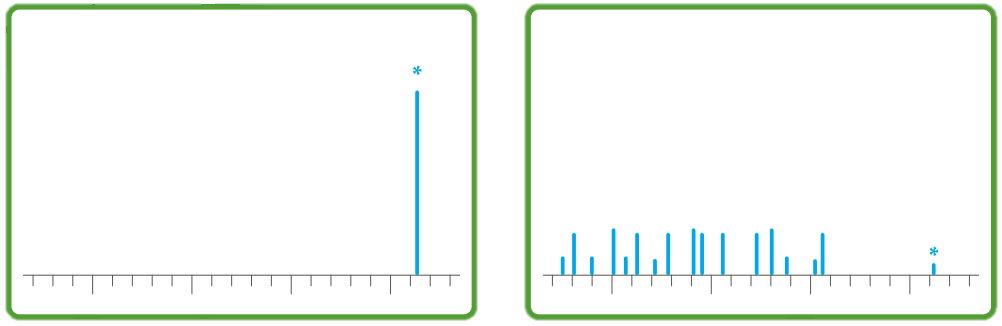
This course unit is our last novel topic before we go over a summary of LCMS troubleshooting and you have the opportunity to assess your knowledge using our quiz. This week, we will be looking at undesired fragmentation and ion source settings. Incorrect fragmentation impairs identification (MS/MS) and quantification, producing either too many fragments or too few.
1. Symptoms
2. Common Causes and Solutions
| Issue | Description | Solution |
|---|---|---|
| Ion Source Setting Too Harsh |
A high desolvation temperature or spray voltage can break down analytes prematurely, which prevents the correct ions from reaching the quadrupoles
|
Reduce the source temperature or voltage gradually
Perform ion source optimisation for your compounds of interest
|
| Collision Energy Mismatch |
Excessive collision energy can cause over fragmentation
Low collision energy can cause incomplete fragmentation
|
Optimise the collision energy for each analyte; start with vendor-recommended settings.
Perform MRM optimisation
|
| Ion Optics / Transfer Settings |
Incorrect voltages or misalignment reduce precursor ion transmission
|
Verify the Qarray and desolvation voltages
|
3. Optimisation Strategy

The next unit will summarise some of the key concepts we have discussed in the course and provide you with a link to the quiz where upon completion with a pass mark of greater than 75% provides you with our Training Certificate.
Your Shimadzu LCMS Team
Related Resources
-
-
-
Watch short videos explaining analytical intelligence features of Shimadzu HPLC systems