Fundamentals of Preparative Chromatography
Preparative Chromatography Course
1 - Fundamentals of Preparative Chromatography
2 - Preparative Workflow
3 - Preparative Chromatography Instrumentation
4 - Key Considerations: Part 1
5 - Key Considerations: Part 2
6 - Column Selection
7 - Automated Preparative Purification Instrumentation - UFPLC
8 - Automatic Analytical to Preparative Scale Up
9 - Triggering Fractionation
10 - Preparative SFC
11 - Course Summary & Test

Welcome to the Course
How does preparative liquid chromatography work? What is the difference between analytical and preparative HPLC? How do I choose the right preparative column, optimise purification methods, and improve compound recovery?
If you've asked any of these questions, you're in the right place.
This course answers these common questions while covering the key principles of preparative liquid chromatography (Prep HPLC), including method development, scale-up, column selection and purification strategies. By the end, you'll have a clearer understanding of how to optimise separations and improve purification outcomes in the laboratory.
Fundamentals of Preparative Chromatography
Chromatography is an analytical technique used to separate mixtures of compounds based on their physicochemical properties.
One of its most widely used forms is high-performance liquid chromatography (HPLC), in which a liquid mobile phase is pumped through a packed column under high pressure to achieve efficient separation.
Depending on the objective of the experiment, HPLC can be divided into two main categories: analytical HPLC, used for identification and quantification, and preparative HPLC, used for isolation and purification.
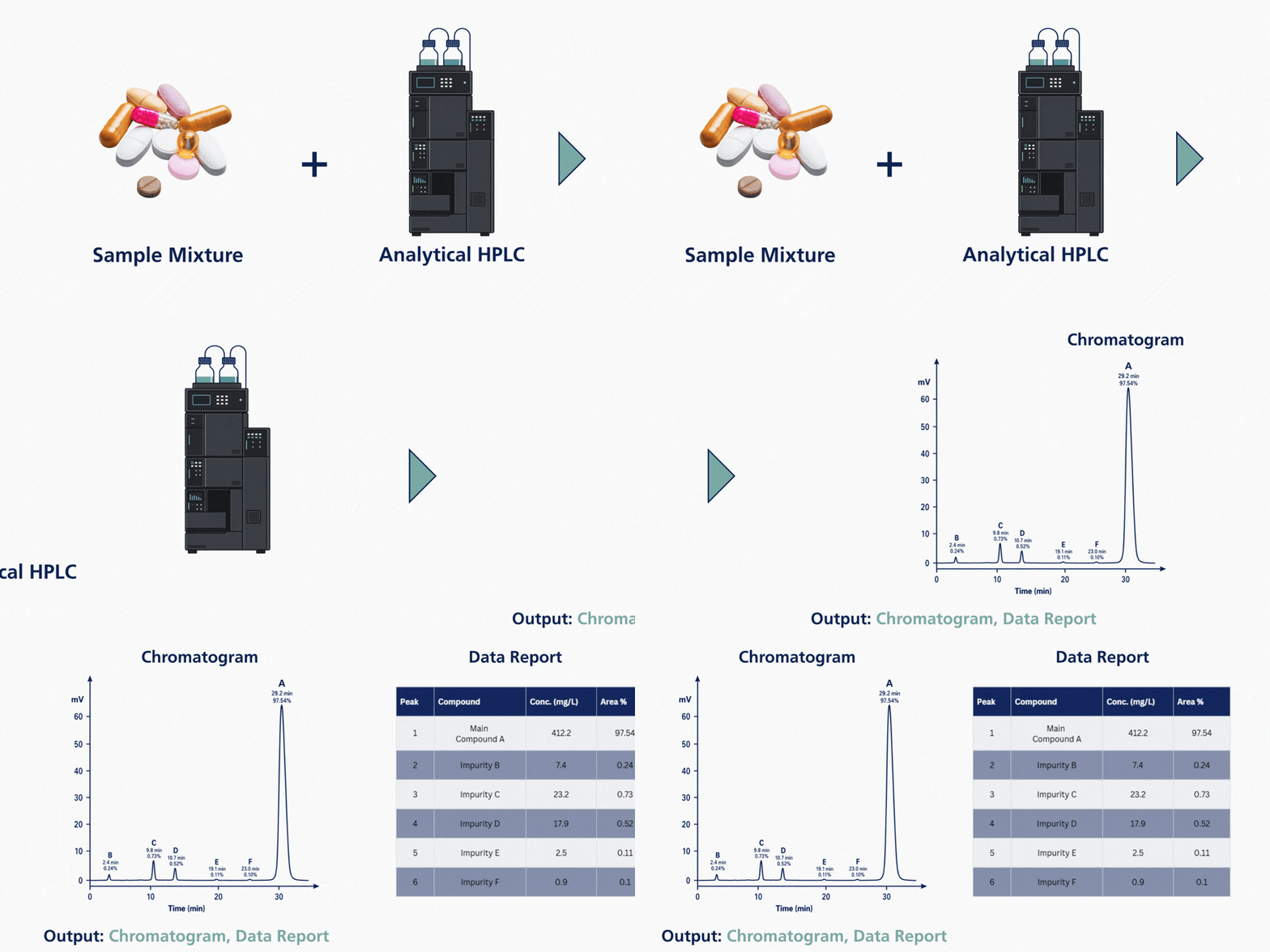
What is the Purpose of Analytical HPLC?
Analytical HPLC usually serves one of two roles, these are:
- Qualification - To identify specific compounds within a mixture.
- Quantitation – To determine the amount of a compound in a mixture.
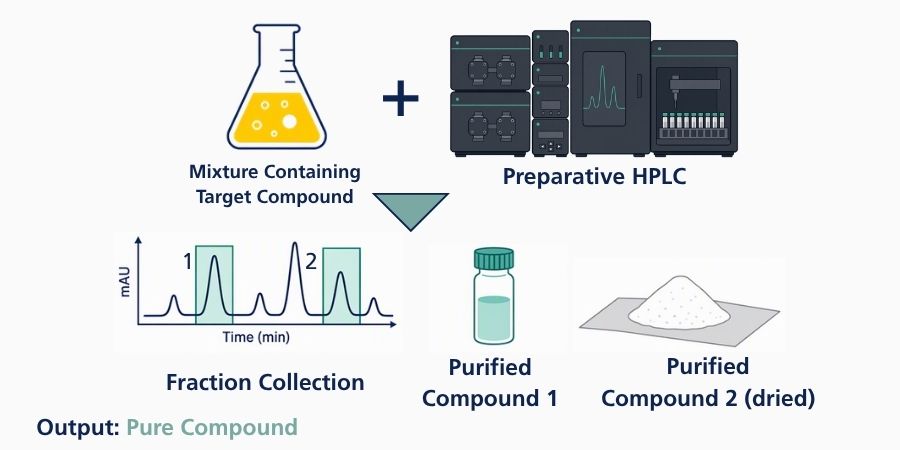
What is the Purpose of Preparative HPLC?
As mentioned, preparative HPLC, also known as prep HPLC, is used to isolate and purify compounds from mixtures through their separation into individual fractions. Although alternative methods such as open-column and flash-column chromatography can also be employed, they generally provide lower-resolution, cruder purification. Preparative HPLC is therefore preferred when high-purity isolated compounds are required. Purification can be performed on small molecules (e.g. pharmaceuticals, pesticides), mid-size molecules (e.g. peptides) and large molecular compounds (e.g. polymers, proteins).
As mentioned, preparative HPLC, also known as prep HPLC, is used to isolate and purify compounds from mixtures through their separation into individual fractions. Although alternative methods such as open-column and flash-column chromatography can also be employed, they generally provide lower-resolution, cruder purification. Preparative HPLC is therefore preferred when high-purity isolated compounds are required. Purification can be performed on small molecules (e.g. pharmaceuticals, pesticides), mid-size molecules (e.g. peptides) and large molecular compounds (e.g. polymers, proteins)
Who is Interested in Liquid Chromatography (LC) Purification?
-
-
For many applications and industries, obtaining high purity compounds is essential not only from a quality perspective, but also due to legal restrictions and regulations. That makes prep HPLC applicable across a variety of sectors from:
- Academia
- Pharma / Life Sciences
- Food and Beverage
- Natural products and nutraceutical
- Environmental
- Chemical manufacturing
-
-
Despite the variation in what prep HPLC is used for across these industries, it is worth noting that their objectives are usually very similar. So, while the exact details of the method changes from industry to industry the overall requirements needed from HPLC systems tend to be the same.
While the application areas which use this technique are varied, their objectives are usually very similar, with very similar issues which need to be addressed.
Why is Preparative Chromatography Required?
- Purification of synthetic products and impurities
> Structural or biochemical analysis
> Requires enough high purity material for the next synthetic step .
- Isolation of active compounds in natural products
- Structural or biochemical analysis
- Required enough high purity material for the next synthetic step
- Sample pre-treatment – some analytical methods require a sample isolated from a matrix using LC purification
- Commercial production
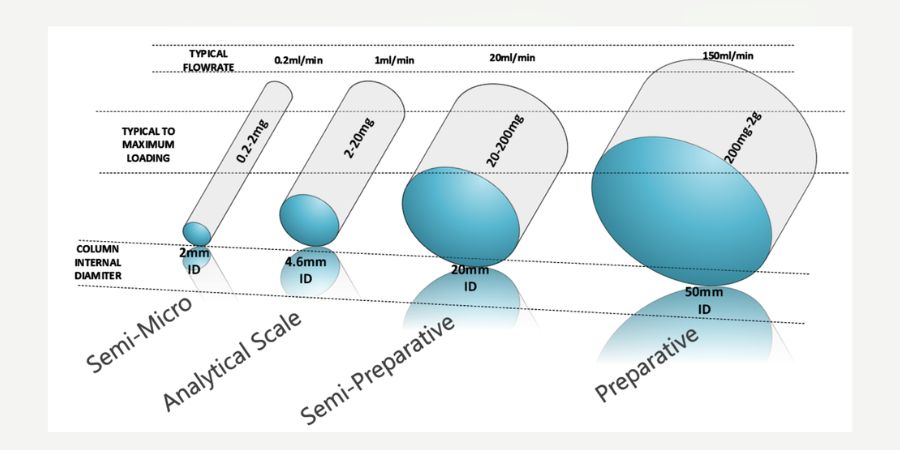
The scale of preparative purification depends on the amount of product required. These dictate which operating parameters can be used, such as flow rate, column format and sample loading. If we look at this chart we can see the general descriptions for different LC column sizes.
Down at low flow rates we have narrow 2 mm internal diameter (ID) columns sometimes referred to as semi-micro scale. This is typically used for biochemical preparation.
The next internal diameter up is around 4.6 mm ID columns which is known as the analytical scale. These applications tend to also be for biochemical preparations as well as structural analysis. The semi-preparative scale employs 20 mm ID columns, for structural analysis, pre-treatment and purification. Lastly, 50 mm ID columns, which can have flow rates of up to 150 mL/min is the preparative scale, used for purification and pre-treatment. Larger internal diameter columns can be purchased but these are usually used on an industrial scale and use L/min flow rates.
Each of these column sizes have a typical to maximum loading displayed in the figure, but as you can see this range tends to be large and is only a guide.
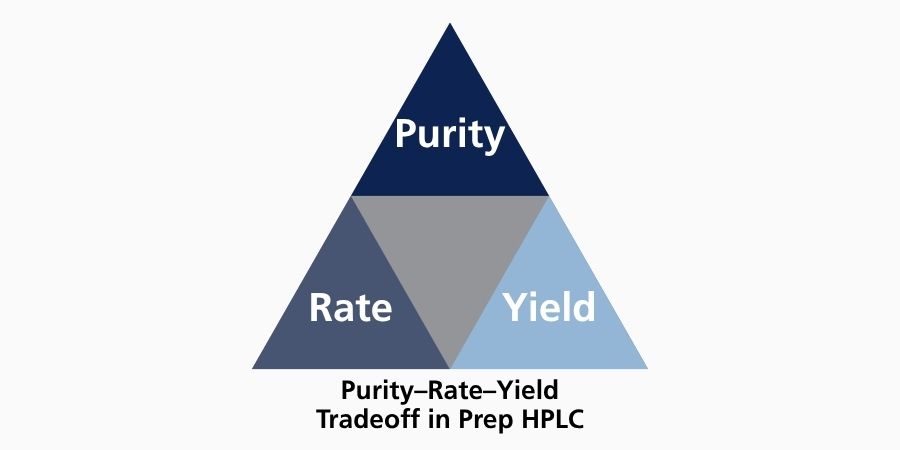
Analytical HPLC usually serves one of two roles, these are:
- Purity
- Rate
- Yield
For example, if a highly pure, large yield is required, this often means a slower rate. If speed and purity is of the essence, then yield is often compromised. It is down to the individual requirements of the lab to determine what is a reasonable compromise for these three parameters. We will learn more about these in later modules to help make these decisions.
Join us in the next Course Unit to learn more about the preparative workflow with a worked example.
Best regards,
Your Shimadzu Chromatography Team
Related Resources
-
-
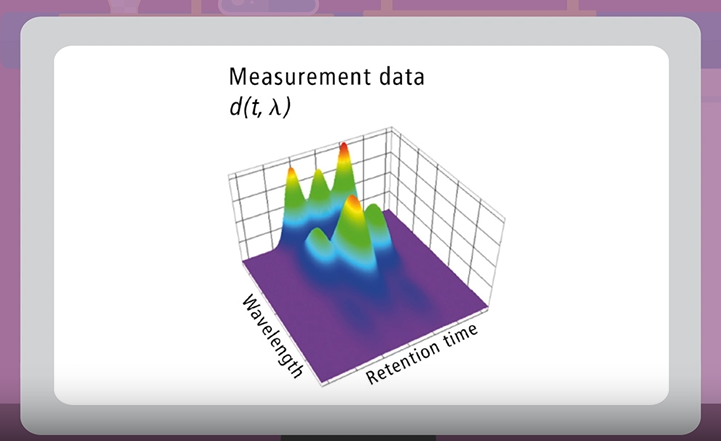
Watch short videos explaining analytical intelligence features of Shimadzu HPLC systems
-