Key Considerations: Part 2
Preparative Chromatography Course
1 - Fundamentals of Preparative Chromatography
3 - Preparative Chromatography Instrumentation
4 - Key Considerations: Part 1
5 - Key Considerations: Part 2
6 - Column Selection
7 - Automated Preparative Purification Instrumentation - UFPLC
8 - Automatic Analytical to Preparative Scale Up
9 - Triggering Fractionation
10 - Preparative SFC
11 - Course Summary & Test

Key Considerations: Part 2
Welcome back to this 5th module, and the conclusion of our two-part investigation into key considerations. We previously looked at the requirements for a separation also and the impact of loading studies and their importance.
Let’s begin by looking at the chromatographic considerations.
Chromatographic Considerations

Figure 1. Key Parameters Influencing Preparative HPLC Method Development
The three main considerations for any chromatographic separation are the stationary phase, the mobile phase and sample considerations (Figure 1). However, the nuances for preparative chromatographic considerations are usually slightly different to those used on an analytical scale.

Figure 1. Key Parameters Influencing Preparative HPLC Method Development
Knowledge of the compounds of interest can help to direct the decisions for the mobile phase or stationary phase. It can also help to know what sample diluent to utilise to avoid peak shape issues. Compounds with weak retention tend to have a smaller load quantity (Figure 1). Conditions should be set for the target compound to be retained sufficiently to avoid other peak shape issues.
|
Figure 3. Influence of Temperature on Preparative Chromatography Performance
|
Most preparative chromatography is not performed in a column oven due to the size of the column which would struggle to fit into conventional column ovens. Stationary phases can be stored in Column Hubs, but these are not temperature controlled like a conventional HPLC oven. As such, it is preferable to evaluate the column temperature at room temperature. One of the major factors for working at room temperature relate to the column dimensions. As the column diameter increases, the temperature gradient within the column becomes more pronounced. This causes the peaks to become broader due to the parabolic flow of the analyte band migrating through the column. The band moves faster at the wall of the column, than the middle of the column, which causes the band to disperse, and reduce the efficiency of the fraction. This causes detrimental peak shapes as illustrated in Figure 3.
|

|
Table 1. Common HPLC Buffer Systems, pH Ranges and Volatility Characteristics
|
This is investigated by varying the injection amount in stages using the same concentration sample. When increasing the injection volume, it is necessary to pay special attention to the effect of the sample solvent. It is necessary to pay special attention to the effect of the sample solvent. In cases where the sample solvent has a stronger elution power than the mobile phase, the peak shape may deteriorate depending on the injection volume (a tendency to exhibit leading – the red trace in the chromatogram in Figure 4). For example, in reversed phase mode, a high proportion of methanol can often lead to detrimental peak shape. When the sample diluent is weaker than the elution strength of the mobile phase, the peak is not adversely affected by broadening. Since it greatly depends on the column internal diameter, it is important to pay attention to the injection volume when reducing the column ID. Set the target pH based on that information when the structure and pKa of the compound are known. The buffer should be selected so that the buffering capacity is near the set pH. It is important to choose volatile salts or acids in cases where concentration or drying is anticipated, or if mass spectrometry is used as the mode of detection.
|


Customer concerns:
|
|
Method development is a difficult activity for most separations. Shimadzu’s LabSolutions MD can assist with this process, by providing a platform for screening, method development and robustness testing on an analytical scale which can then be translated to the preparative scale downstream. Criteria can be set for the automatic exploration of gradient conditions which allows for seamless method development for tricky compounds.
|

|
Figure 7. Automated Method Transfer from Analytical to Preparative HPLC Systems
|
Moving from the analytical scale to the preparative scale can be tricky if you don’t remember all the parameters which need to be adjusted for the different column formats. This includes:
LabSolutions MD can convert an analytical scale method to prep scale just by adding the column information and flow rate. This ensures the method can be simply scales with fewer technical issues.
|


This course unit has covered a wide array of considerations for preparative chromatography, which should give you a broad overview of points to be aware of. We will cover in more detail influencing factors for selecting stationary phases in the next course unit.
Best regards,
Your Shimadzu Chromatography Team
Related Resources
-
-
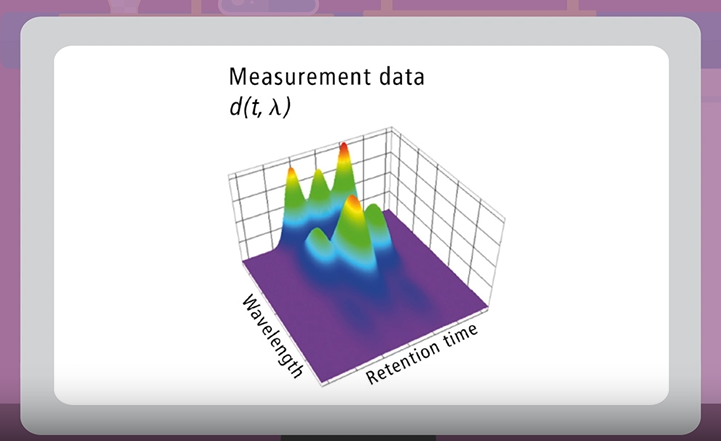
Watch short videos explaining analytical intelligence features of Shimadzu HPLC systems
-