


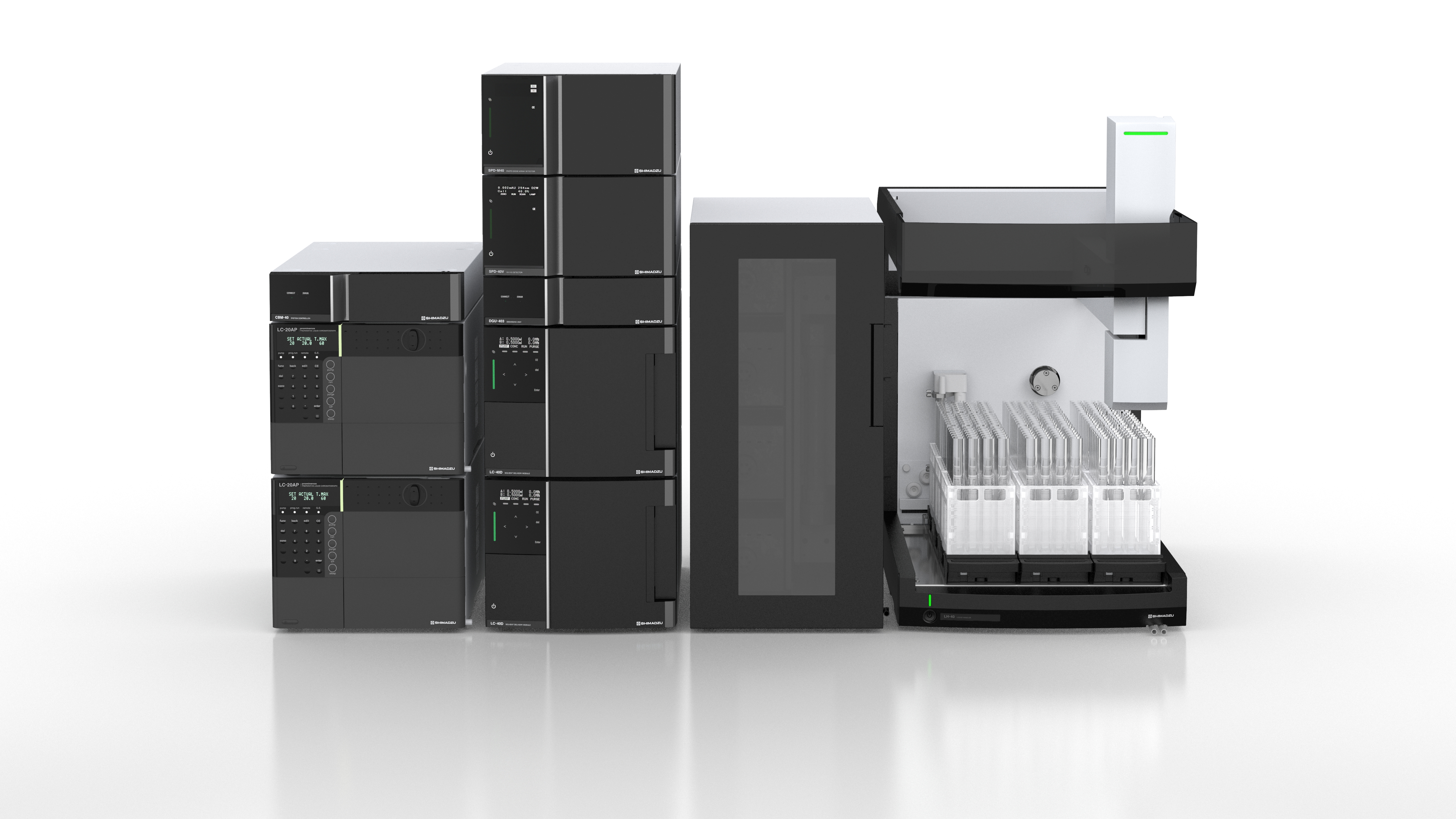
Scalable purification solutions for efficient compound isolation and high-purity separations.


Preparative Chromatography Course

This is our last unit to build your understanding on preparative chromatography. This unit, we will be looking at a different modality which is beginning to gain traction in laboratories; supercritical fluid chromatography prep. If you need a better understanding on SFC as a technique, then we have another online course which would give you a perfect foundation to understand this growing technique.
SFC conventionally employs supercritical carbon dioxide as an eluent. Supercritical fluids are created when a substance is above its critical point. Organic solvents are commonly added to the mobile phase to extend the analysis window for a wide range of polarities, which causes the carbon dioxide to become subcritical, however, this is still under the umbrella of SFC. SFC can offer orthogonal chromatography to reversed phase separations and with vast improvements in the reliability of instrumentation, there is a growing interest in utilising this modality.
| Benefits of SFC Prep | Limitations / Issues of SFC Prep |
|---|---|
|
|
The SFC system requires a pump capable of handling the carbon dioxide, a modifier pump, and a mixer which leads to an autosampler. This leads through the column hub, to the detector such as a PDA then a back pressure regulator which is necessary to keep the carbon dioxide supercritical. It is possible to configure a mass spectrometer after the back pressure regulator, and to tee in a make-up pump if required. Finally, a fraction collector is required to collate all the compounds of interest.
Depending on the objective of the experiment, HPLC can be divided into two main categories: analytical HPLC, used for identification and quantification, and preparative HPLC, used for isolation and purification.

The SFC system requires a pump capable of handling the carbon dioxide, a modifier pump, and a mixer which leads to an autosampler. This leads through the column hub, to the detector such as a PDA then a back pressure regulator which is necessary to keep the carbon dioxide supercritical. It is possible to configure a mass spectrometer after the back pressure regulator, and to tee in a make-up pump if required. Finally, a fraction collector is required to collate all the compounds of interest.
Preparative LC serves as a powerful tool for achieving higher purity and recovery rate levels of target components, but it requires drying and powderising steps.
SFC can improve preparative workflow efficiency by significantly reducing the amount of work involved in the powderisation process after preparative purification. The Nexera UC product line includes three systems: a stacked fraction system intended for large-volume fractionation, a multi-fraction system for separating multiple peaks, and an analytical fraction system intended for analysis-scale fractionation.
|
|
This system is optimised for large volume fractionation that involves repeatedly injecting compounds with up to several components. The FRS-40 injection and collection unit can function as both an injector and fraction collector for repeatedly injecting the same sample to collect gram-level preparative fractions. It can inject volumes up to 20 mL* and collect ten fractions. It supports flow rates from 10 to 150 mL/min and connecting columns with an internal diameter from 10 to 30 mm. This sort of system is typically used for chiral separations, to increase the resolution between the species. It is for large volumes, for a small number of peaks. |
|
|
This system is suitable for applications involving fractionation of multiple components in samples with many peaks detected, such as for impurities in pharmaceuticals. Volumes up to 2 mL* can be injected using an autosampler that holds up to 162 samples (when using 1.5 mL vials). The FRC-40 SF fraction collector can collect up to 540 fractions (using 10 mL vials). It supports flow rates from 10 to 150 mL/min and connecting columns with an internal diameter from 10 to 30 mm. |
|
|
This system enables analysis-scale fractionation for applications that only require fraction quantities up to several milligrams, such as for checking synthesis. By connecting an FRC-40 SF fraction collector to the Nexera UC system, the same system can be used for applications ranging from determining analytical conditions by method scouting to preparative separation of about a few milligrams. With a maximum flow rate of 5 mL/min, it supports using analytical size columns. |

A fraction collector is downstream of the back pressure regulator which is used to keep the pressure above the critical point for carbon dioxide. Upon exiting the BPR, carbon dioxide transitions from the supercritical fluid state to the gas, where its volume immediately expands by about 500 times. This can cause eluant to splatter from the column, a factor leading to lower recovery rates. A gas-liquid separator (GLS) is required to address this. However, the design can have significant impact on the success of the GLS.
Depending on the objective of the experiment, HPLC can be divided into two main categories: analytical HPLC, used for identification and quantification, and preparative HPLC, used for isolation and purification.

Shimadzu’s newly developed LotusStream GLS utilises branched channels which results in excellent recovery and reduced carryover. The flow rate is decreased without increasing the pipe diameter by splitting through these channels. As a result, the carbon dioxide is discharged externally and the liquid travels along the column and then drips directly into the collection vessel below without the eluate splattering.

The improvements in recovery can be observed in the table beside where the conventional nozzle only had a recovery rate for 1% linalool of 78.0%, whereas by simply changing to the LotusSteam GLS, the recovery improved to 96.7%.

There is also a LotusStreamTM GLS available for the analytical scale, which allows for fractionation of small volumes, even into vessels such as 1.5 mL vials. The volatile optical isomers of linalool in this figure illustrates high purity fractionation using the LotusStreamTM separator.
(1) Volume of CO2
The amount of supercritical CO2 needs to be carefully controlled. It is important to have a CO2 monitor installed to detect gas leaks. This is relevant for both prep and analytical scale.
(2) Stationary phase chemistry
Ensure that the analytical scale stationary phase is available in the preparative scale format.
(3) Loading studies
It is important to perform loading studies from an analytical scale up to prep scale. It is important to know about the solubility of the sample in question. The injection volume is increased incrementally until acceptable resolution has been lost or loss of pure fractions.
(4) Scaling
The injection volume and flow rate are geometrically scaled to maintain peak shape.
(5) Health and Safety
Although there are several benefits for employing SFC prep, there are some inherent risks involved. The quantity of carbon dioxide required is vast which could be catastrophic in the event of a leak due to the CO” being denser than air causing asphyxiation. It also needs to have adequate exhaust extraction with the fraction collection bottles stored in an appropriate exhausted fume enclosure.
|
|
Like preparative HPLC, preparative SFC begins with analysis-scale optimisation before scaling up. This involves switching to a preparative column, adjusting the mobile phase flow rate, and modifying the sample injection volume. Equivalent separation can be achieved by increasing flow rate and injection volume in proportion to the column’s cross-sectional area. The figure here shows an example of changing from an analysis scale to a preparative scale. By using a column with the same stationary phase, separation equivalent to the analysis scale can be achieved. |

The workflow for preparative analysis is similar between both HPLC and SFC modalities. The sample is first chromatographed using a scouting gradient. This is then optimised to meet the separation criteria, which means adjusting the %B/min change, the temperature, the backpressure regulator settings and other operating parameters. Upon completion of the method on the analytical scale, a loading study should be performed to ensure there isn’t any issue with the chromatography on a larger scale based on sample concentration. Finally, the method can then be scaled up geometrically for the new column dimensions by adjusting the injection volume and flow rate so the compound of interest can be purified. ASAPrep technology can also be used with SFC separations making it extremely beneficial for both modalities.
That concludes our discussion of SFC preparative chromatography, and our online course. We thank you again for your participation and wish you much success in the final test.
If you have enjoyed this course, then feel free to inform your colleagues, employees, friends, and acquaintances who work with or have an interest in prep who want to gain a greater understanding.
To assess what you have picked up along the way, and to achieve our Certificate of Participation, please click on the link below to access the quiz. Best of luck with the quiz and with your future preparative chromatography endeavours.
Best regards,
Your Shimadzu Chromatography Team
Scalable purification solutions for efficient compound isolation and high-purity separations.
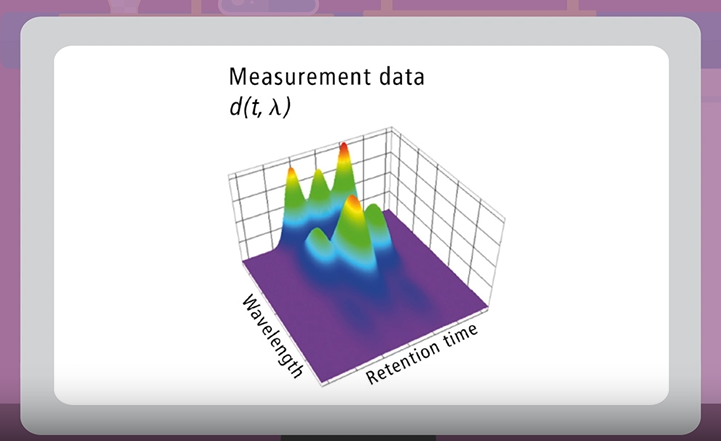

Learn the fundamentals of SFC and discover its advantages for modern separations.
Gain practical insights into semi-preparative purification workflows and best practices.