General:
- Conduct regular system suitability tests
- Check the system with multiple repetitions of a reference
- Document retention times, resolution, etc, of the reference solutions


LCMS Troubleshooting Course
6 - Changes in Peak Shape - Part 2
8 - Peak Area Fluctuations
9 - Baseline Disturbances
10 - Retention Time Fluctuations - Part 1
11 - Retention Time Fluctuations - Part 2
12 - Changes in Chromatographic Resolution
13 - Changes in MS Response
14 - Undesired Fragmentation & Ion Source Settings
15 - Course Summary & Quiz
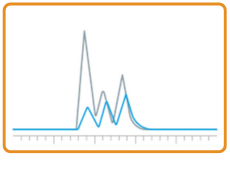
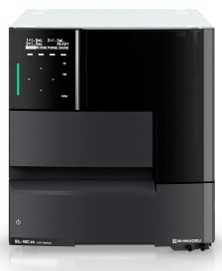
Welcome back for the 8th installment of the LCMS Troubleshooting Course. Accurate quantitation is only possible with highly robust and accurate instrumentation. The main culprits for peak area fluctuations can be divided into autosampler or detector issues. This course will provide some suggestions to eliminate this problem.
| Issue | Solution |
|---|---|
| Injection Volume Variability |
Confirm batch injection volume is correct.
Run a system suitability test mixture for baseline assessment
|
| Needle Rinse Problems |
Check solvent levels in rinse lines.
Try different rinse solvents to improve cleaning
|
| Viscous Samples |
Reduce draw speed for viscous samples
|
| Air Bubbles |
Purge injector metering pump for air bubbles
Inspect sample vials for bubbles, especially low volume / tapered vials
|
| Adsorption |
Some analytes may adsorb onto injector or vial surfaces
Consider alternative vial types or materials
Use a non-adsorbing test mixture to rule out autosampler issues
|
| Issue | Solution |
|---|---|
| Sensitivity Drop for All Peaks |
Perform routine maintenance; clean ion source and optics
|
| Method Parameters |
Verify acquisition parameters in your method
|
| Adduct Formation |
Check for unexpected adducts (Na+, NH4+, K+)
|
| Mobile Phase Quality |
Prepare fresh mobile phases and adjust additive / buffer concentration as needed
|
| Probe Position |
Ensure Probe is correctly positioned relative to the orifice
|
| Matrix Effects |
Assess for ion suppression
Consider alternative sample prep or LC methods
|
| Blocked Components |
Replace blocked capillary or desolvation line
|
| Instrument Tuning |
Perform and review MS tuning for optimal performance
|
| Issue | Solution |
|---|---|
| Sample Degradation |
Check for sample degradation and prepare a fresh sample
Look to see if another peak is increasing in height whilst another decreases
Check sample preparation and standard / QC concentration
|
| Check to see if an incorrect sample diluent was used |
Reprepare the sample with the correct diluent
|
| LC Leaks |
Check for loose fittings post injector on the system
|
| Mobile Phase Issues |
Check the concentration of the additives. Only use volatile additives like formic acid for one day as the formic acid will evaporate thereby changing the concentration of the mobile phase, affecting the ionisation of the sample
If a mobile phase additive which can cause ion suppression was used, such as TFA (trifluoroacetic acid), perform a MS clean for the source and internal components to improve the signal
|
| Loss of Column Performance |
Check the peak widths and resolution
Test the column using the system suitability test mixture with known results
Test the column performance using a system suitability test mixtures. Replace the column if the column is no longer performing to standard.
|
General:
- Conduct regular system suitability tests
- Check the system with multiple repetitions of a reference
- Document retention times, resolution, etc, of the reference solutions
System:
- Keep a column diary
- Document maintenance
- Adjust pretreatment of the sample matrix
- Select a suitable rinse solution
Next week, we shall be covering high background signals and contamination in the mass spectrometer. In the following weeks, please join us to learn more about retention time fluctuations, losses in chromatographic resolution, changes in MS resolution and undesirable fragmentation.
Your Shimadzu LCMS Team
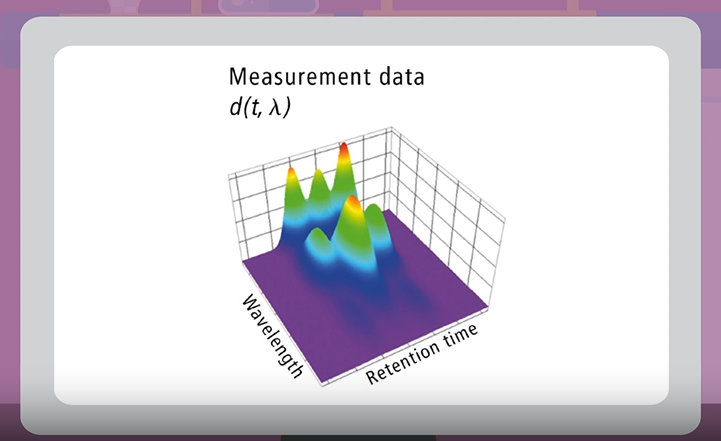
Watch short videos explaining analytical intelligence features of Shimadzu HPLC systems